DJI 1024Wh Power Station Review UK 2026
Quick verdict
Score: 8.1/10
Best for: Home backup, caravans and running larger appliances
Not for: Whole-home backup without a much larger system
Bottom line: A practical portable power station with 1024Wh capacity and long-life LiFePO4 cells, best matched to the device wattages and runtime you actually need.
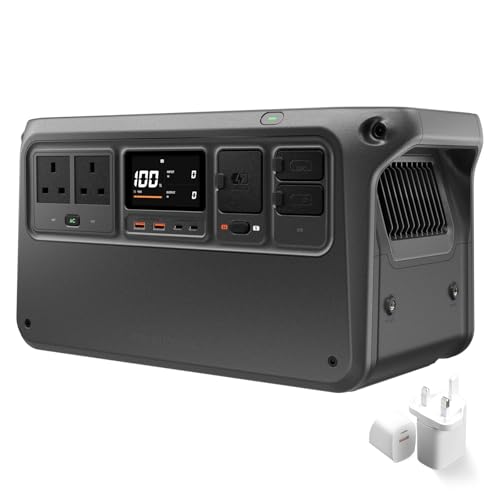
The DJI 1024Wh Power Station is a strong option for portable power, featuring a 1024Wh LiFePO4 battery and a rated 2600W output. It supports fast charging, reaching 80% in 37 minutes, making it suitable for camping, DIY work and short backup needs where turnaround matters. The large capacity and LiFePO4 chemistry indicate long cycle life. Overall, this portable power station is worth considering for demanding outings.
Key specifications
| Spec | Value Notes |
|---|---|
| Capacity | 1024Wh Battery energy |
| Output | 2600W Rated output |
| Battery type | LiFePO4 3000+ cycles typical |
| Dimensions | 44.8 x 22.5 x 23 cm L x W x H |
Pros
- 1024Wh capacity
- 2600W rated output
- Long-life LiFePO4 battery
- Quiet, fume-free portable power
Cons
- Solar panel usually sold separately
- Not a substitute for whole-home backup
Capacity and What It Powers
With a 1024Wh capacity and a rated 2600W output, the DJI is sized for running common appliances for short-to-medium sessions, including camping, DIY work, and home backup. Typical uses include powering kettles, cookers, projectors, and power tools such as saws and drills, as listed for the portable power station. Runtime depends on the connected load, with higher-draw devices draining the 1024Wh battery faster. The LiFePO4 design supports long use cycles, but capacity still limits continuous operation.
Output and Ports
Even though capacity sets the overall energy limit, output and ports determine what can run at the same time, and how devices connect. The DJI is rated for 2600W output, which makes it suitable for larger appliances as long as the total load stays within that limit. Its ports include dual 140W USB-C connections, providing up to 280W in total across those ports, which supports faster charging than single-port setups, though the overall draw still matters. AC output is available for standard UK-style needs. Each device's input requirements should be checked, then loads should be split across ports to avoid overloading any single connection.
Recharging and Solar
Recharging is a core part of owning the portable power station, because refill speed shapes practical runtime planning. For grid charging, the manufacturer states the unit supports fast charging, and the package includes an AC power cable for that purpose. For outdoor charging, the DJI 1024Wh Power Station solar generator route depends on using a compatible solar input. A buyer should plan for slower solar recharge than grid charging, and use daylight top-ups to reduce downtime. The recharging workflow is straightforward: connect the AC power or compatible solar input, wait for the unit to recover, then resume running connected loads.
Battery Type and Lifespan
Battery type and lifespan are central to how the DJI holds up over time, because long-term performance depends on both recharging behaviour and battery wear. It uses a LiFePO4 battery, which the manufacturer describes as a long-life option with a 10-year lifespan, supported by an intelligent BMS. Typical cycle expectations are 3000+ cycles, though real-world results vary based on load and charging habits. Durability is the main advantage, while the main downside is that lifespan can reduce with misuse.
Portability and Build
The portable power station is designed to be moved between locations without needing a full-sized generator setup, and its compact body helps with portability. It measures 44.8 L x 22.5 W x 23 H cm, making the footprint easier to store in cupboards, caravans, and vehicle boots in the DJI setup, though it still requires clear carrying space. The housing is made for outdoor use, and the battery uses LiFePO4 chemistry, which supports a long service life. As a portable power station for camping, it is typically easier to transport than heavier alternatives, but bulk can still matter when carrying alone.
Who Is This Power Station For?
The portable power station is best suited to people who need portable backup power for day-to-day essentials in the UK, rather than heavy, continuous loads. Its compact footprint makes it a practical match for camping kit and everyday household charging needs, particularly when the goal is to keep smaller appliances running during short outages. For homeowners considering whether this portable power station is any good, the 1024Wh capacity and 2600W rated output align it with intermittent use cases such as device charging and brief backup power. It is also a strong option when searching for a power station for power cuts where quiet operation and fast recharging are priorities.
Where to Buy in the UK
Buyers in the UK usually look for bundled listings for the DJI, because the DJI 1024Wh Power Station package is described as including the Power 1000 V2 and the portable power station Cable. To compare this portable power station best price uk, they typically review major retailer and marketplace pages, then check the listed capacity, rated output, and LiFePO4 battery chemistry. Some shoppers use The DJI amazon for fast delivery, but they still confirm the seller identity and the exact bundle contents. Where stock varies between listings, they consider return eligibility and warranty support, since package details and shipping requirements can differ by seller.
Frequently Asked Questions
What can the portable power station power?
With 1024Wh capacity and 2600W rated output, The DJI suits fridges, power tools and most household appliances for a time. Match the device wattage to the station's rated output before relying on it.
How long will the portable power station last?
Roughly, runtime = 1024Wh minus around 10-15% conversion loss, divided by the device's watts. A 60W device on this station runs for several hours; a high-watt appliance drains it far faster.
Can you recharge the DJI 1024Wh Power Station with solar?
Most stations including this one can recharge from a compatible solar panel, usually sold separately, which is what makes it a "solar generator" for off-grid and power cuts.
What battery does this portable power station use and how long will it last?
The DJI uses a LiFePO4 battery (long lifespan, 3000+ cycles typical). LiFePO4 cells typically keep 80% capacity after 3000+ charge cycles - roughly ten years of regular use - and are safer and more stable than older lithium-ion.
Is the portable power station good for power cuts and camping?
The DJI is well suited to camping, caravans and as backup during power cuts. For whole-home backup you would need a far larger unit and proper switchover, so treat it as essentials backup.
Is the portable power station worth it?
If you camp, face power cuts, or want quiet portable power, this portable power station earns its place for its 1024Wh capacity. Check the current Amazon UK price, as power stations are heavily discounted around Prime Day and Black Friday.