Bluetti EB3A vs Bluetti Elite 30
We compare the Bluetti EB3A and the Bluetti Elite 30 across every dimension that matters - our scores, the key specs, and how each performs on the things you will actually notice day to day.

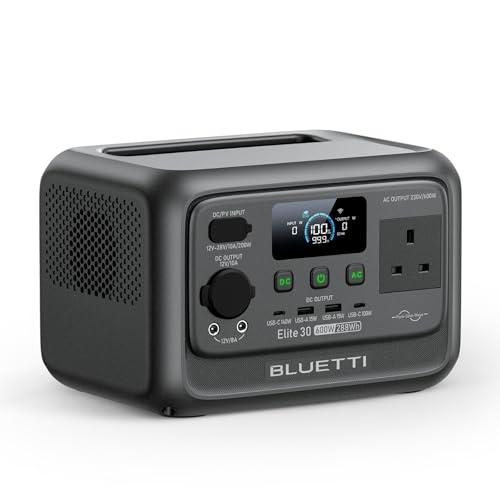
At a glance
| Bluetti EB3A | Bluetti Elite 30 | |
|---|---|---|
| Our score | 8.1/10 | 7.7/10 |
| Best for | Phones, laptops and light camping use | Phones, laptops and light camping use |
| Not ideal for | Running fridges or power tools | Running fridges or power tools |
| Brand | Bluetti | Bluetti |
Capacity and What It Powers
Bluetti EB3A
With a 268Wh LiFePO4 battery, this portable power station is aimed at short runtime tasks, such as powering essential electronics during an outage or running small devices while travelling. The 268Wh capacity is suitable for essentials rather than long backups because the available energy is limited. The rated 600W AC inverter can handle moderate loads, and it supports a brief 1200W surge peak for start-up demand when a connected device draws higher power at switch-on. For solar-assisted use, it can also be recharged via a compatible solar input, so practical runtime depends on how quickly the battery is replenished.
Bluetti Elite 30
With a 288Wh LiFePO4 battery, the Bluetti is sized for short, practical power needs rather than long back-up runtimes, and its 600W continuous output sets the limit for what it can run at once. As a bluetti power station, it can handle key necessities such as camping lights, speakers, and a car fridge, along with critical devices like laptops and CPAP machines. For higher bursts, it supports 1500W surge, but longer operation is expected to become shorter as the load increases. It fits quick home emergencies and outdoor trips, not whole-home standby.
Output and Ports
Bluetti EB3A
Output and ports are central to the EB3A's day-to-day usefulness, because the way power is delivered determines which devices can run and how easily users can connect them. In the bluetti eb3a uk, the inverter is rated at 600W AC, with a 1200W surge peak, so many small appliances fit, but power-hungry tools may not. It uses LiFePO4 with 9 outlets, providing multiple connection points during outages. The main limitation highlighted in bluetti eb3a pros and cons is fewer high-draw options, since total output is capped at the 600W rated figure.
Bluetti Elite 30
Output on the portable power station is rated at 600W continuous, and it can briefly deliver up to 1500W surge when Power Lifting Mode is activated. That matters for starting loads that draw more at switch-on, such as some kettles or toasters. Ports include an AC output, plus DC options intended for running vital devices.
Recharging and Solar
Bluetti EB3A
Recharging is one of the EB3A's main practical features, offering fast recovery and solar support for off-grid use. In the bluetti EB3A portable power station with a solar panel setup, it accepts up to 350W input via a single charging cable, and the manufacturer claims a full charge in 45 minutes. For quicker mixed charging, PV plus AC can raise state of charge to 80% in about 30 minutes, assuming both inputs are available. For solar, the built-in MPPT controller supports up to 200W panel input, using BLUETTI PV120 or PV200 panels, while the solar charging cable is included and any compatible panel is chosen separately.
Bluetti Elite 30
Recharging the Bluetti can be done in several ways, and the best approach depends on whether the priority is quick recovery, off-grid charging, or emergency backup. The unit supports AC wall charging at 380 W, or 200 W adjustable, and The portable power station states a full recharge from 0-80% in 45 minutes, or 0-100% in 70 minutes. For off-grid setups, it also accepts solar input using the bluetti solar generator option that matches the PV60L panel. Car charging is supported via a cable, and a UPS switch keeps critical devices running, switching in about 10 ms. The Bluetti Elite 30 V2 best price in the UK can vary by retailer, so checking bundles helps.
Battery Type and Lifespan
Bluetti EB3A
The Bluetti uses a LiFePO4 battery pack, a chemistry designed for repeated daily use and a long service life. A typical recharge cycle count above 3000 is stated, which The portable power station translates to a lifespan of around 10 years when the pack is regularly charged and used. LiFePO4 is also known for safer operation and steadier performance than many other lithium chemistries, although specific safety limits are not detailed.
Bluetti Elite 30
The Bluetti uses a LiFePO4 battery type, a chemistry chosen for a long service life and steady performance over time. This is supported by the manufacturer's typical 3000+ cycle figure, which points to strong endurance for frequent recharging rather than periodic replacement. The unit's 288Wh capacity is positioned to remain usable for everyday and emergency routines. Real-world longevity still depends on charging and storage conditions, since heat and harsh cycling can reduce performance over time. Overall, bluetti elite 30 pros and cons focus on lifespan benefits balanced against variable user handling.
Portability and Build
Bluetti EB3A
At just 4.6 kilograms, the Bluetti is built for easy carry, and its dimensions of 25.5 x 18 x 18.3 cm are compact enough for most small storage spaces. Its box-like design helps it travel alongside camping gear, which makes the portable power station a practical option when space is tight. The unit uses LiFePO4 cells, supporting repeated charging cycles over its service life.
Bluetti Elite 30
Weighing 4.3 kilograms and measuring 24.7 cm (L) x 31.7 cm (W) x 34 cm (H), the portable power station is built for day trips and home backup use, rather than being a fixed whole-home system. The build feels oriented towards outdoor handling, although the unit remains bulky in a small car boot. For portability, its main advantage is straightforward movement during storms and quick deployment at campsites, making it a practical portable power station for camping. The box includes basic cables, and no additional carry accessories are specified.
Who Is This Power Station For?
Bluetti EB3A
Who is the Bluetti EB3A for, and what kind of needs does it actually match? This portable power station review suits people who want a compact backup for crucial devices, especially during power cuts. It is designed for small homes, offices, and travel, weighing 4.6kg with a 268Wh LiFePO4 battery and a 600W rated AC inverter. During outages, it can run key devices, and its instant UPS backup helps protect PCs. Solar buyers can pair it with solar panels up to 200W.
Bluetti Elite 30
At 4.3 kg and about 24.7 x 31.7 x 34 cm, the Bluetti is aimed at people who want a compact, portable power station rather than a whole-home backup system. With 288Wh capacity, it suits camping, road trips, beach visits, and shorter emergency needs where power for key devices is the priority. The LiFePO4 battery supports longer cycle use, and the built-in UPS is designed to help during sudden outages. The portable power station is typically considered when shoppers ask for around 600W continuous output and 1500W surge for important essentials.
Bluetti EB3A: pros
- 268Wh capacity
- 600W rated output (1200W surge peak)
- Long-life LiFePO4 battery
- Quiet, fume-free portable power
Cons
- Solar panel usually sold separately
- Not a substitute for whole-home backup
Bluetti Elite 30: pros
- 288Wh capacity
- 600W rated output (1500W surge peak)
- Long-life LiFePO4 battery
- Quiet, fume-free portable power
Cons
- Solar panel usually sold separately
- Not a substitute for whole-home backup
Our verdict
Our pick is the Bluetti EB3A (our score 8.1/10) - A practical portable power station with 268Wh capacity and long-life LiFePO4 cells, best matched to the device wattages and runtime you actually need. The Bluetti Elite 30 is still worth it if it is cheaper when you check, or if it better matches your specific needs.